

Kuzuzangpola – Hello in Bhutanese!
Bhutan – here I am
I just am,
I am not where I was,
or where I am headed,
I am here, in-between,
living the moment;
sometimes with certainty,
sometimes on a whim.
I am neither lost nor found,
I just am.
It was time to return to Bhutan after the pandemic years – to see what had changed, what remained, and to feel once again what this kingdom does to the soul. Finally, I found the time, and here I am – discovering this season’s Bhutan with its quieter charm, lush landscapes, flowing rivers, and that particular serenity that exists nowhere else.
The truth is, there shouldn’t be any seasonality here. Bhutan is a 365-day destination, each season revealing different facets of the same profound experience.
The Journey Begins
In a world obsessed with AI and speed, with constant connectivity and endless noise, traveling in Bhutan feels like stepping into a different dimension of time itself.
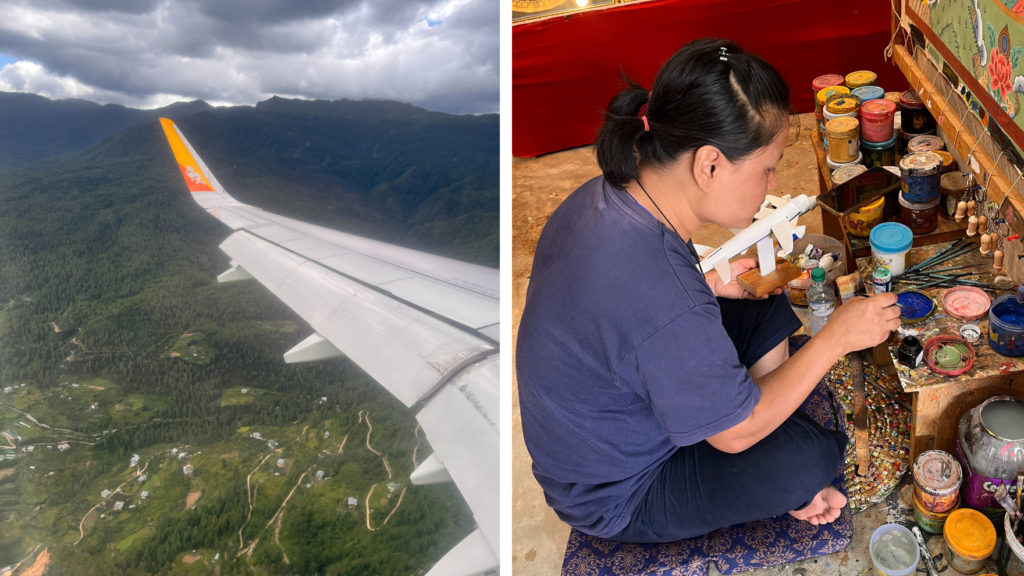
The moment you board the Druk Air flight to Paro, something shifts. The crew moves with unhurried grace. Fellow passengers seem to exhale collectively as the plane climbs over the Himalayas. And then, those views – peaks that seem to touch eternity, valleys that cradle centuries of undisturbed tradition.
The welcome continues on the ground. From the immigration officers who actually smile and mean it, to every interaction that follows, you realize you’ve entered a place where hospitality isn’t a service industry concept – it’s a way of being.
Thimphu, the capital, famously operates without a single traffic light. White-gloved police officers direct traffic with balletic hand movements at major intersections. It’s charming, yes, but it’s also symbolic of something deeper – Bhutan’s deliberate choice to embrace modernity on its own terms, at its own pace. Race and speed are not for Bhutan and the Bhutanese. They move through life with intentionality, and gradually, if you allow it, their pace becomes yours.
This is where the real journey begins – when you stop rushing and start being.
The Philosophy Made Edible
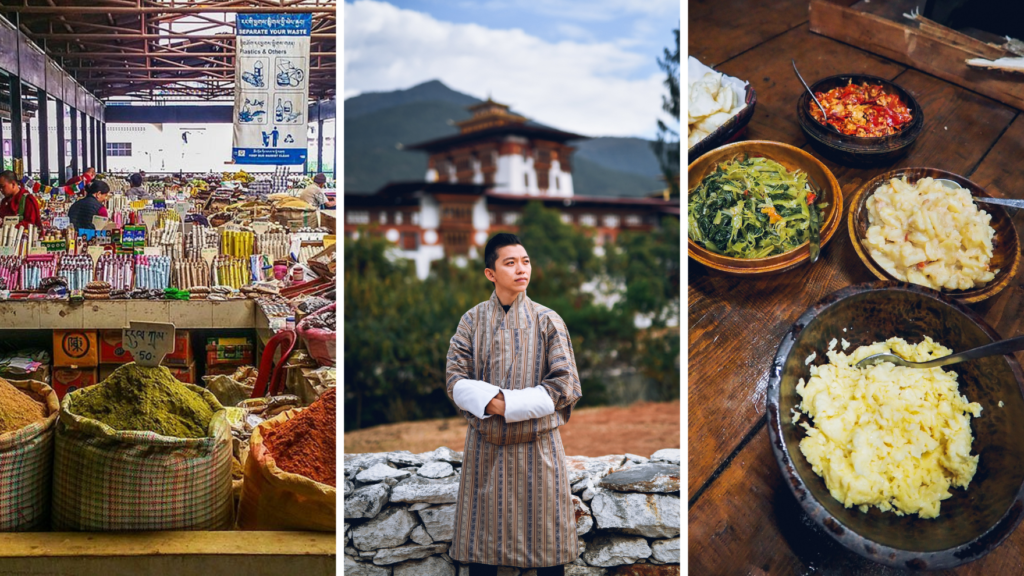
Before I talk about hotels and itineraries, let me tell you about the farmers’ market in Thimphu. Because if you want to understand why Bhutan measures Gross National Happiness instead of GDP, stand in this market on a Saturday morning.
Farmers arrive with produce grown in their valleys. No middlemen. No packaging. Just direct connection between land and people. The vegetables are impossibly fresh. The chilies are extraordinary. The exchanges are unhurried, often accompanied by laughter. Everyone seems to know everyone. And you realize – happy farmers, happy people. It’s not a policy. It’s reality.
Every meal in Bhutan becomes a lesson in balance. The butter tea that takes getting used to but then becomes essential. The Ema Datshi – cheese and chilies – that’s simultaneously simple and complex, comfort food that challenges. The red rice. The buckwheat. Food that’s tied to the land, to seasons, to tradition.
And everywhere, the national dress. The Gho for men, the Kira for women. Not costumes worn for tourists but daily attire worn with pride. Watching schoolchildren walk home in their traditional dress, chatting and laughing, utterly unselfconscious – it’s a reminder that culture here isn’t preserved in museums. It’s lived.
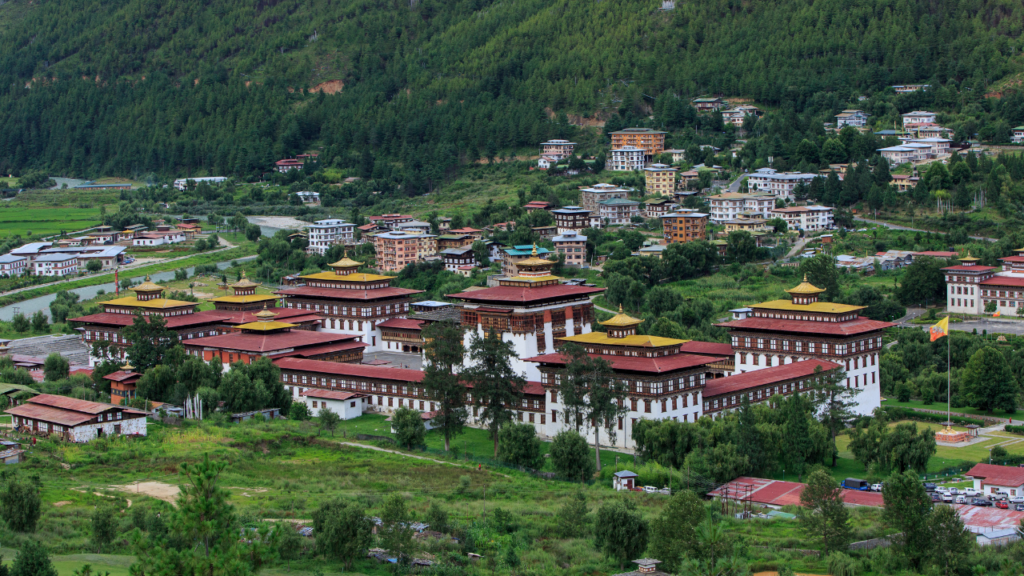
Thimphu: Finding Your Ground
Amankora Thimphu occupies a special place in my heart. The Aman sensibility – that particular minimalism that creates space for your own experience rather than overwhelming you with theirs – works beautifully in Bhutan. Their location, slightly removed from the town center, creates a sanctuary feeling. The service is intuitive without being intrusive.
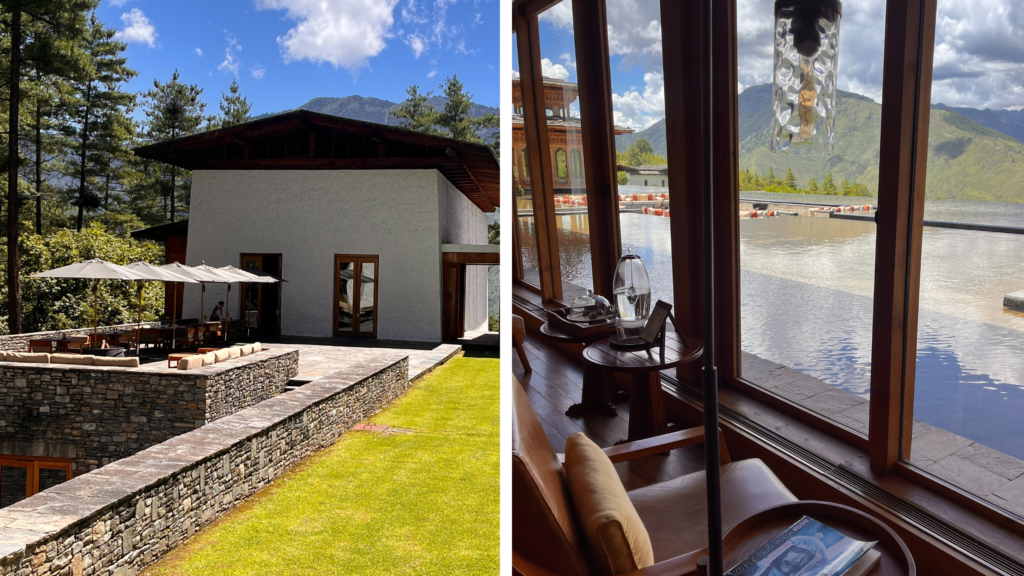
For travelers with different budgets, IHCL Yarkay delivers honest value. Nothing pretentious, just solid comfort and warm Bhutanese hospitality. Pemako is more grand, sitting prominently in the heart of the small capital – their sales manager is genuinely helpful, the kind who understands that luxury is as much about care as it is about thread count.
I regret not having time to visit The Postcard Dewa, though conversations with their sales head, my friend Anshul Monocha, left me intrigued. Four Seasons delivers their signature polish, though personally, in Thimphu, I find Amankora more aligned with the Bhutanese spirit.
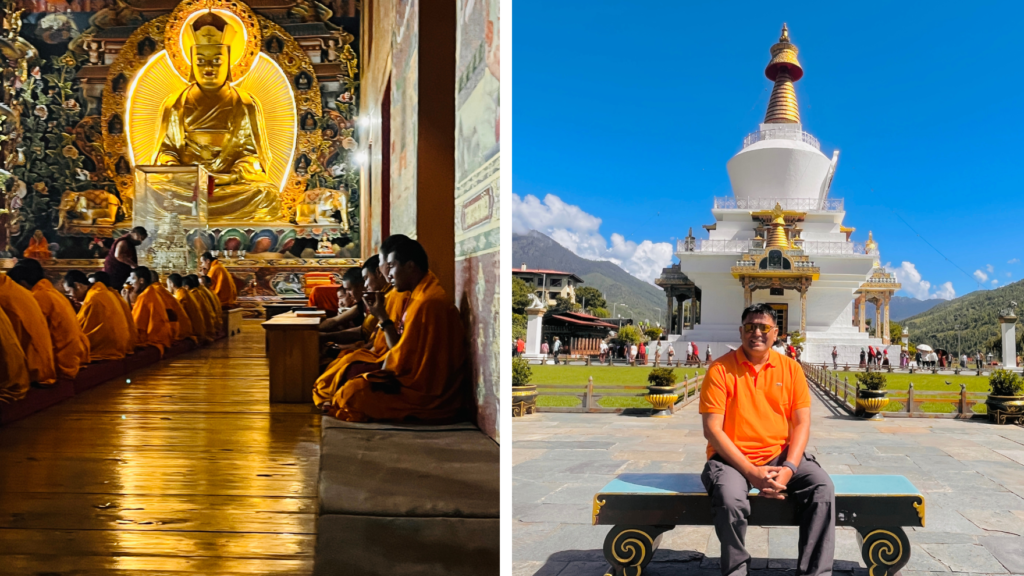
The experiences matter more than the accommodation. Dining at Zachum for authentic Bhutanese cuisine. The hike to the great sitting Buddha that overlooks the valley – not strenuous, but enough to earn the view. Time spent at monasteries when monks are in prayer, the deep chanting resonating in your chest. The market on weekends. These aren’t tourist activities. They’re invitations to understand.
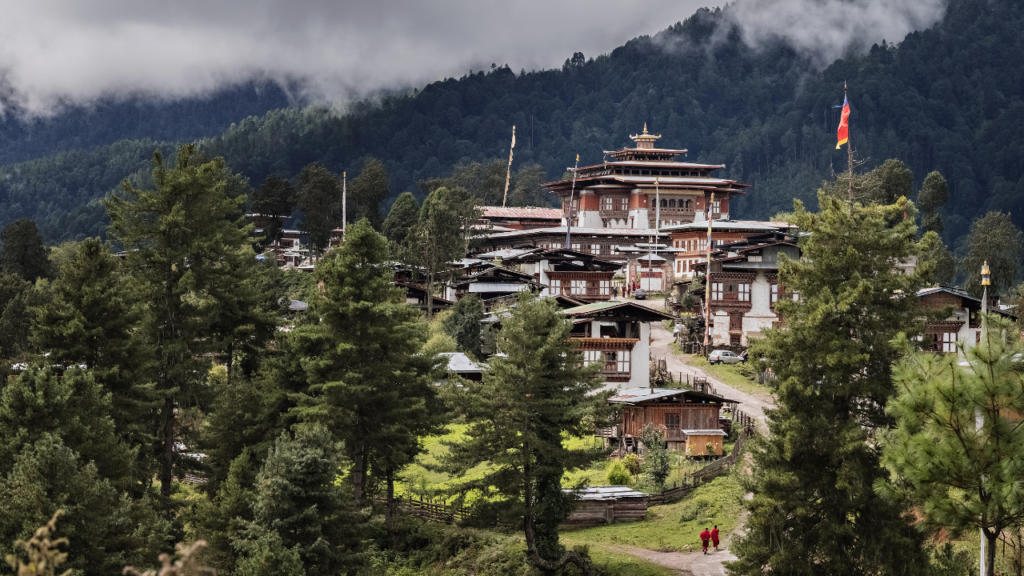
Gangtey: Where the Soul Expands
Then you arrive in Gangtey, and something fundamental shifts.
This glacial valley, remote and pristine, is where black-necked cranes migrate each winter from Tibet. The valley floor is a patchwork of fields and wetlands. The air is thinner, cleaner, somehow more transparent. Everything feels more essential here.
Gangtey is about walking. Soft hikes through pine forests where prayer flags flutter between trees. Trails that wind past farmhouses where smoke curls from chimneys. The kind of outdoors that restores something you didn’t know needed restoring.
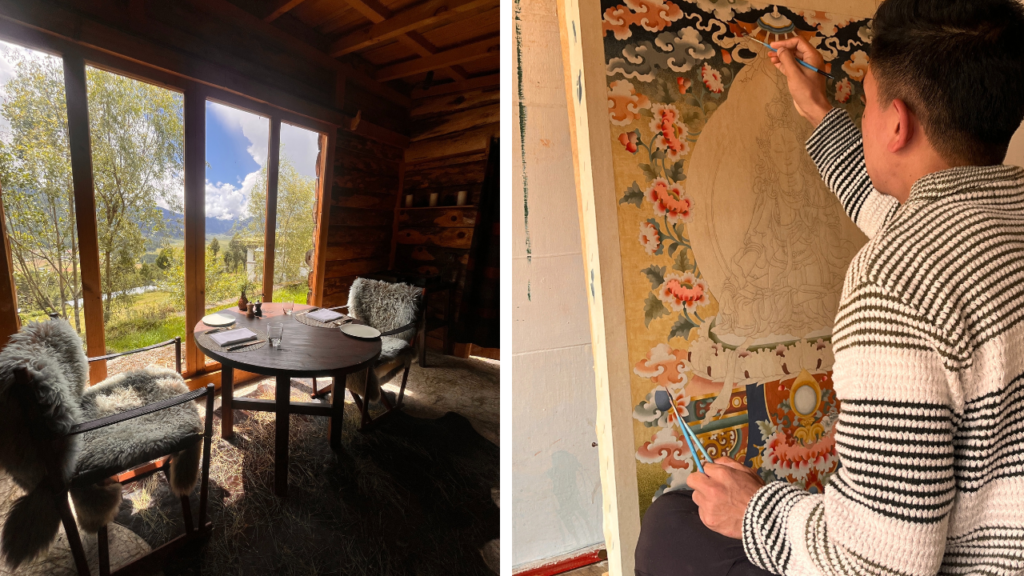
Gangtey Lodge is where I always return, and here’s why it matters.
Yes, Amankora Gangtey is beautiful with its signature aesthetic. Four Seasons delivers impeccable service and their particular brand of luxury. Both are excellent choices. But Gangtey Lodge has something ineffable – a soul that the others, for all their polish, somehow don’t quite capture.
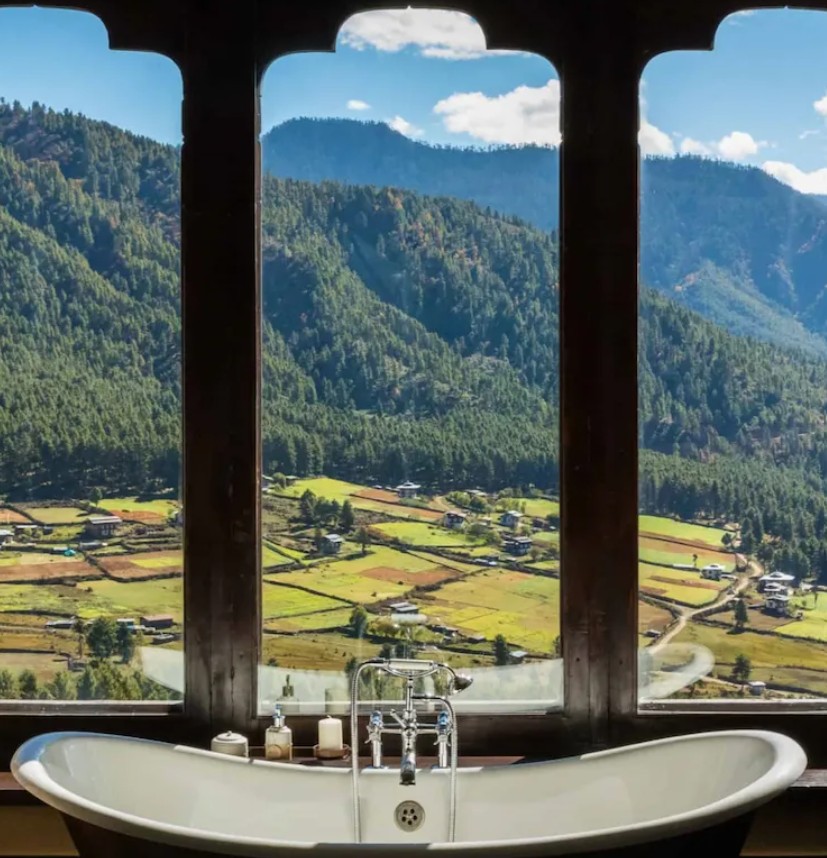
It’s family-owned, and you feel that immediately. The lodge was built with deep respect for the valley, positioned to frame the landscape rather than dominate it. The eight suites are understated – wooden floors, traditional bukhari stoves, windows that turn the valley into living art. But it’s not about the rooms.
It’s about how the staff know every trail, every monastery, every family in the valley. How they arrange experiences that feel personal rather than programmed. How the meals feature vegetables from the lodge’s own garden and local farms. How evening tea in the lounge, with that view of the valley as light fades, becomes a ritual you miss when you leave.
There’s an intimacy to Gangtey Lodge – they host a maximum of 16 guests. You’re not anonymous. The team remembers your name, your preferences, asks genuine questions. When you return from a hike, there’s hot tea waiting, and someone asks not just “How was it?” but actually wants to know what you saw, felt, experienced.
The lodge organizes visits to the Gangtey monastery that feel like introductions rather than tours. You’re not herded through. You’re invited in. You sit. You observe. You’re offered tea. If you’re interested, conversations unfold with monks about philosophy, about practice, about life.
My evening at the monastery during prayers remains one of my most profound travel memories. The deep horns. The chanting. The smell of butter lamps. And afterward, tea with the monks – not a “cultural experience” but simply humans sharing tea and conversation. This is what Gangtey Lodge facilitates – they create access not to attractions, but to authentic connection.
The personalized meditation session with the Rinpoche felt deeply personal, not performative. An hour of teaching, of practice, of conversation about what meditation actually means in Buddhist tradition. Transformational isn’t too strong a word.
Taj Gangtey Resort and Spa wasn’t complete during my visit, but the location looked promising and the layout thoughtful. Gangtey Tent Resort offers an excellent mid to upper-level option for those seeking something different.
But if you ask where I’d send travelers I genuinely care about – those seeking not just comfort but connection, not just luxury but meaning – it’s Gangtey Lodge. Every time.
Punakha: Beauty That Overwhelms
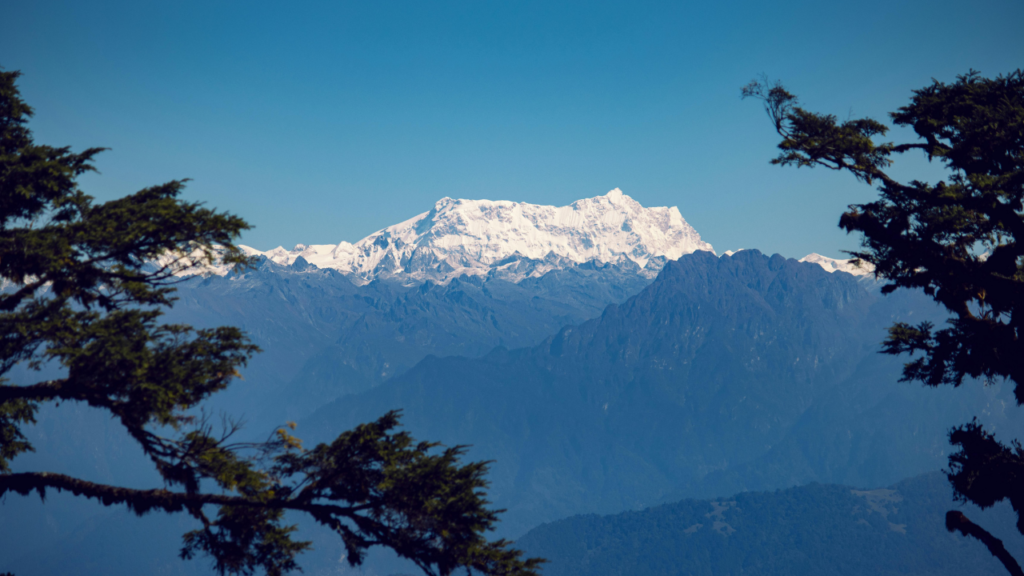
Punakha is stunning in that way that makes you stop mid-sentence and just stare. The dzong at the confluence of two rivers is one of Bhutan’s most beautiful structures. The valley is warmer, more lush, filled with rice paddies and subtropical vegetation.
COMO Uma Punakha is my favorite here. Set in a farmhouse-style property across the valley from Punakha Dzong, it combines COMO’s wellness expertise with genuine warmth. The yoga pavilion overlooks rice fields. The spa is exceptional. The food balances Bhutanese and contemporary cuisine beautifully.
Amankora Punakha, Six Senses, and
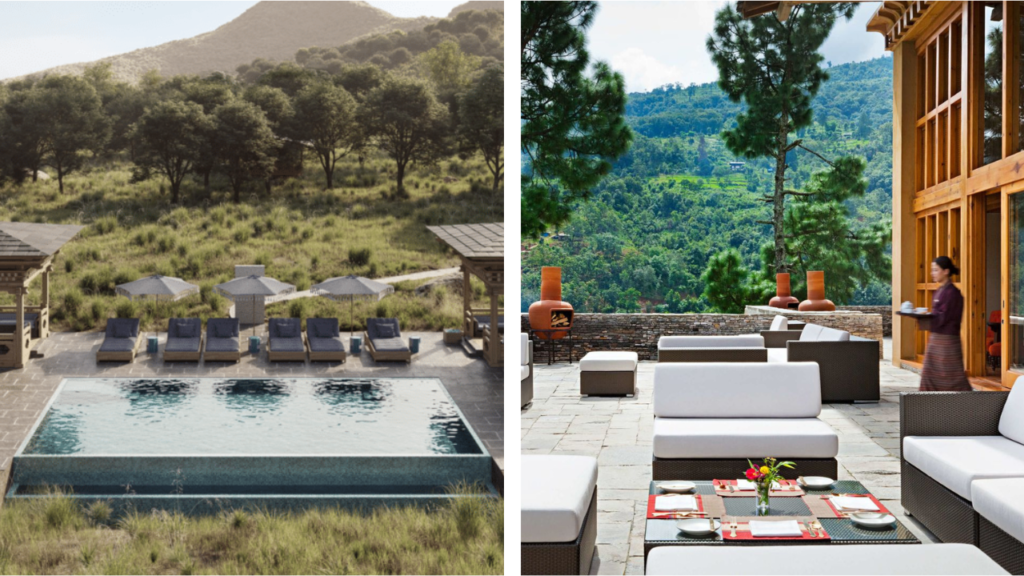
all deliver their signature experiences superbly. The choice depends on your travelers’ preferences, but honestly, Punakha is so beautiful that any of these properties provides a wonderful base.
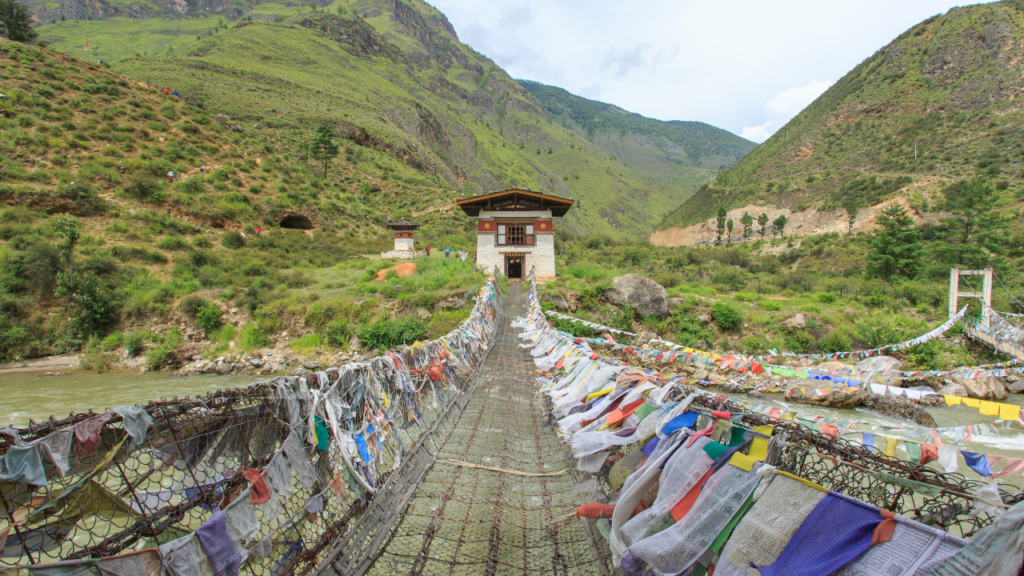
The experiences here are short but profound. The hike to Chimi Lhakhang, the fertility temple, through rice fields and villages. Rafting on the Mo Chhu river (gentle, scenic, joyful). The suspension bridge walk. Time at the dzong. Each enriching, none feeling rushed or manufactured.
Paro: Coming Full Circle
Paro serves as both arrival and departure point, and it deserves time beyond airport logistics.
COMO Uma Paro is our consistent choice. The GM brings wonderful energy to the property. The location, in the Paro valley with views of the dzong, is beautiful. The staff genuinely care about creating meaningful experiences. The guide to Tiger’s Nest they arrange, Tshering, is someone I’d request by name.

Amankora Paro and Six Senses are both stunning. Le Méridien works well for travelers comfortable with larger international properties – solid, professional, well-located. Ziwaling is terrific, and I’d happily use either COMO or Ziwaling depending on availability and guest preferences.
I regret not updating my knowledge of Bhutan Spirit Sanctuary – their wellness retreat concept intrigues me. Next visit.

The Tiger’s Nest hike deserves whatever time it requires. Yes, it’s Bhutan’s most famous site. Yes, it’s on every itinerary. And yes, it absolutely lives up to expectations. The monastery clinging impossibly to a cliff face. The prayer flags. The sense of devotion that built something so audacious in such an improbable location. Go early, take your time, sit in the temple courtyard, let it sink in.
What Bhutan Teaches
Bhutan isn’t about ticking off sights. It’s about allowing a different relationship with time, with nature, with culture, with yourself.
It’s about quality over speed. Depth over breadth. Being over doing.
In our work at Enriching Journeys, we seek destinations and experiences that transform rather than merely entertain. Bhutan does this better than almost anywhere else. But only if you approach it correctly – with time, with openness, with the right guides and properties that understand what travellers truly need.
This isn’t a destination for those seeking to maximize attractions per day. It’s for those ready to slow down, to feel, to connect, to return home somehow different than when they left.
Tashi Delek – which means goodbye, but more accurately translates to “good fortune and blessings.”
May Bhutan offer you both.